Pedestrianize the Beltway
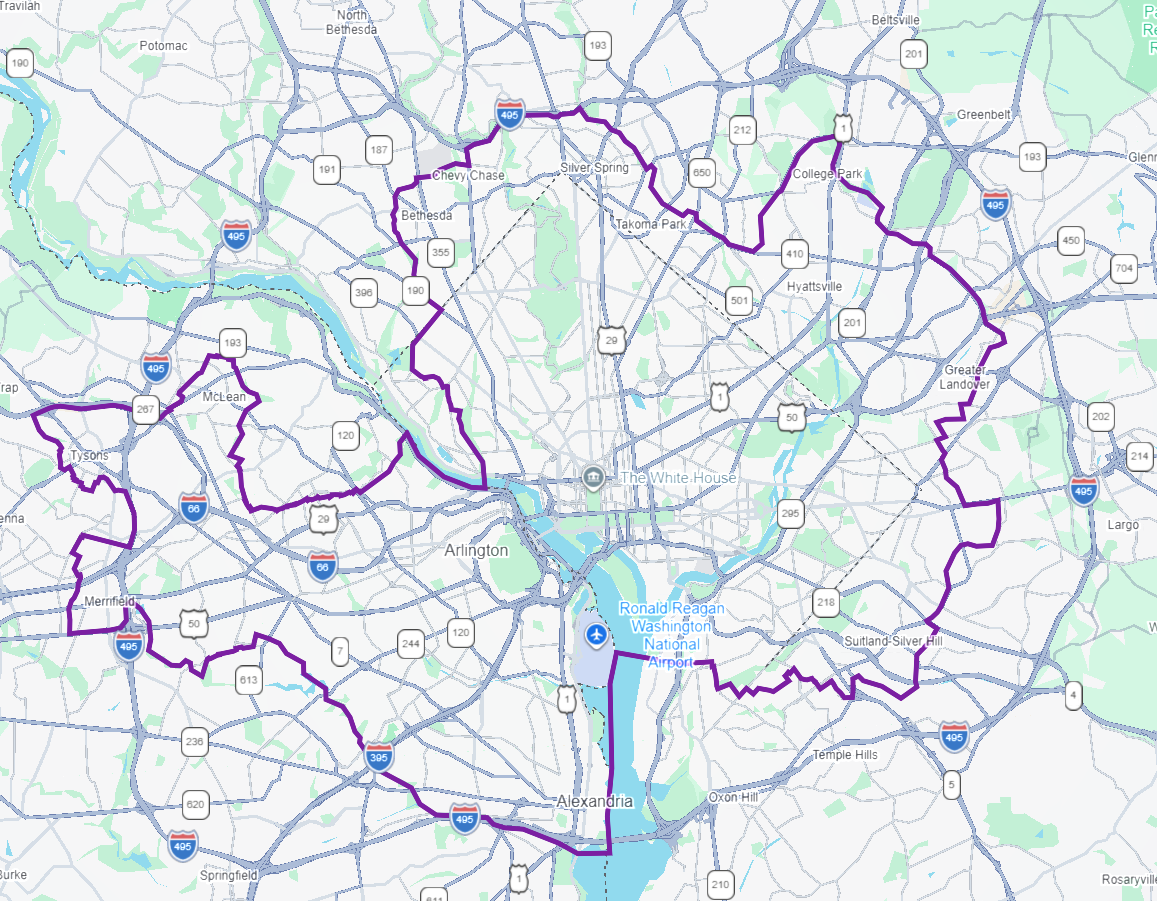
The 495 Beltway is uniquely positioned to experience great benefits from the creation of an uninterrupted pedestrianized zone; these benefits would come with an increase in safety, economic impact, and livability, and a decrease in pollutants, injuries, and stress.
WHY?
The DC region already experiences the lowest levels of car use relative to alternative forms of transportation, with the greatest number of residents opting for transit for some or most trips. Creating greater ease of access to transit can be achieved through removing competing automotive infrastructure around the region’s densest transit hubs, which will allow for more economic- and community-oriented uses of land where the population is already densest.
“Although motorized personal vehicles have dominated urban mobility for decades, the current approach is to shift toward sustainable transportation modes to compensate for environmental damage and the problems related to health that such practice causes (Marcheschi et al., 2022). One practical approach to reducing car dominance is implementing shared streets and car-free programs (Friedman, 2021). These car-free transformation programs (called “pedestrianization”) convert streets to car-free zones by banning all motorized vehicles, and as a result, active transportation is promoted.
Pedestrianization reduces car dependency, traffic, need for parking, and noise pollution, improves safety and accessibility for sustainable mode users, and increases social interactions and public transit use (Soni & Soni, 2016). Likewise, pedestrianization positively influences the livability of cities by enhancing mobility, safety, and accessibility, making the neighborhood a livable place for all its residents (Yassin, 2019). Interestingly, there is a strong link between pedestrianization, health, and quality of life. Pedestrianization plays a pivotal role in active transportation and human activity (Ge et al., 2023). It enhances satisfaction with comfort, safety, security, and health, positively influencing the quality of life (Allirani et al., 2024).
Pedestrianization is also associated with economic growth since it provides financial benefits for retailers: more and more studies prove that retailers located on car-free streets generally record higher sales volumes than shops located in other environments (Hass-Klau, 1993; ¨ Ozdemir & Selçuk, 2017; Yoshimura et al., 2022). Further, car-free streets can be an attraction for tourists, and as a result, they can improve the economic dynamics of touristy cities such as Paris (Kirmizi, 2023). In Montreal (this case study), a 2016 study on Sainte-Catherine Street, pedestrianized in the Summer for nearly 15 years, found that the vacancy rate of commercial spaces was less than in other commercial areas or streets in the city (Bilodeau, 2020). Another recent Montreal survey of the local merchants on 12 pedestrianized streets found that 83 % of them have experienced an increase in their sales since the pedestrianization in 2020 (Baillargeon, 2022)."